HRV | Week 1 | Jack
Heart Rate Variability - Week 1 Iteration
By Jack Duggan
What is it?
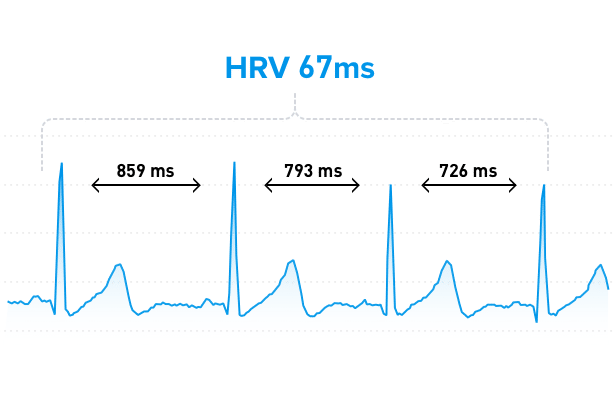
Heart-rate variability (HRV) is simple the measure of the variation in time between each heartbeat.
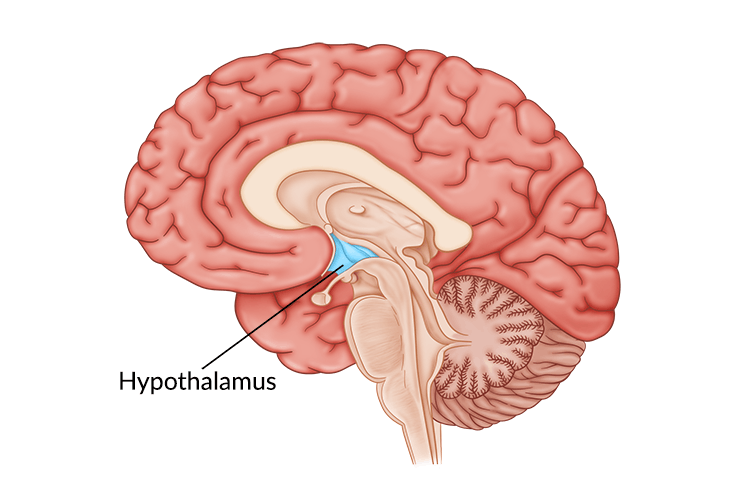
The variation is controlled by the autonomic nervous system (ANS), automatically which automatically our heart rate, blood pressure, breathing and digestion among other key bodily functions.

Using HRV as data
So we know how HRV works, now let's look at what it means. HRV is a definable, trackable value - a piece of data. We also know that factors like stress, exercise and others affect this value.
There are questions about the accuracy, reliability and overall usefulness of tracking HRV.
According to Harvard, if you decide to use HRV as a piece of health data, you shouldn't get too confident about high HRV, or too worried about low HRV.
src: https://www.health.harvard.edu/blog/heart-rate-variability-new-way-track-well-2017112212789
However, in general, people with a high HRV are usually less stressed and happier, and low HRV is considered a sign of current/future health problems, because it shows your body is less resilient and struggles to handle changing situations.
People who have higher heart rates also tend to have lower HRV, as when your heart is beating faster, there's less time between beats, and as such less opportunity for variability.
Brainstorm
Stress Ball? Heart LED?
Jason said something about how not breathing correctly could have the same effect on your body as 'eating 10 burgers'. The biggest hurdle we're encountering here is making people have that eureka moment when we explain just how important good breathing is.
For example, we saw Jason explaining the concept to the 3rd years, and when he dropped the 'breathing bombshell' on them, they basically just pawned it off.
I believe their reaction was instinctive, and because of the following:
We assume our body controls our breathing automatically, and that we have no control over it. This couldn't be further from the case.
We don't consider breathing to be something within our control: such as our diet, exercise and other.
As such, we kind of dismiss the idea that although breathing is subconscious, we do possess full control over it.
Can't last in a cold shower unless you're breathing correctly - Vim Hoff
ice plunges/buddhist mantras/worry beads (all subtly controlling breathinSg?!?!)
src: https://www.myinnerfire.com/
Most efficient transfer of oxygen into your blood.
What qualifies as "good breathing"? consistency? deepness of breaths?
things like tapping your fingers together - is there a bpm thing?
4 in 6 out
Has there been research done on babies - do we come into the world with a good breathing pattern and can environmental factors cause these patterns to change?
- Unsure - babies known to have breathing 'irregularities' that usually dissipate after a few months
src: https://www.healthline.com/health/newborn-breathing#typical-breathing

Having a visual aid to help with controller breathing patterns has been shown to be very helpful. There's even free apps that do a similar thing.
Based on the concept of "balloon breath", where you use some sort of visual aid to imagine inflating/deflating a balloon with your breathing.
The rising mention of HRV in publications

src: https://www.ncbi.nlm.nih.gov/pmc/articles/PMC9205192/
It's clear that it's a topic that's gaining traction.
What products are out there currently?
Whoop Band
The Whoop app has Stress Monitor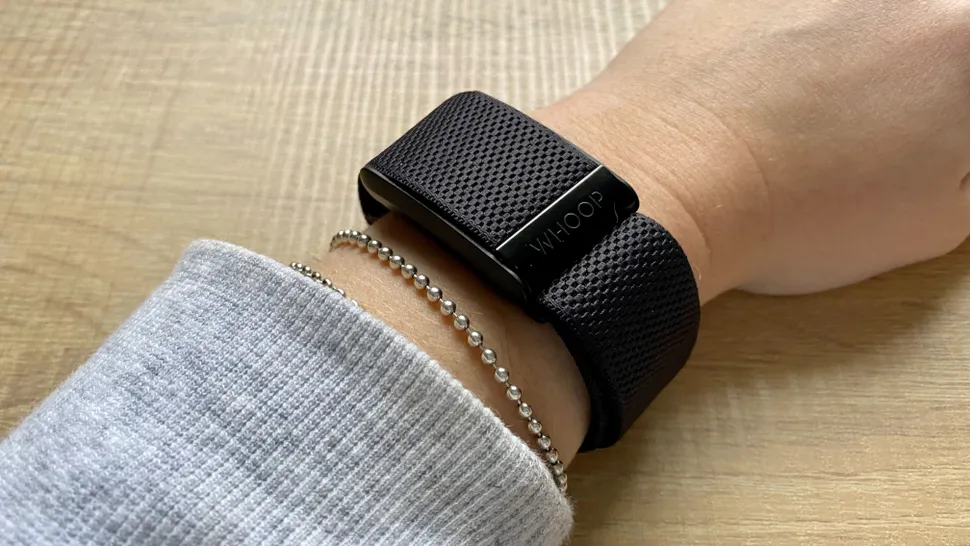
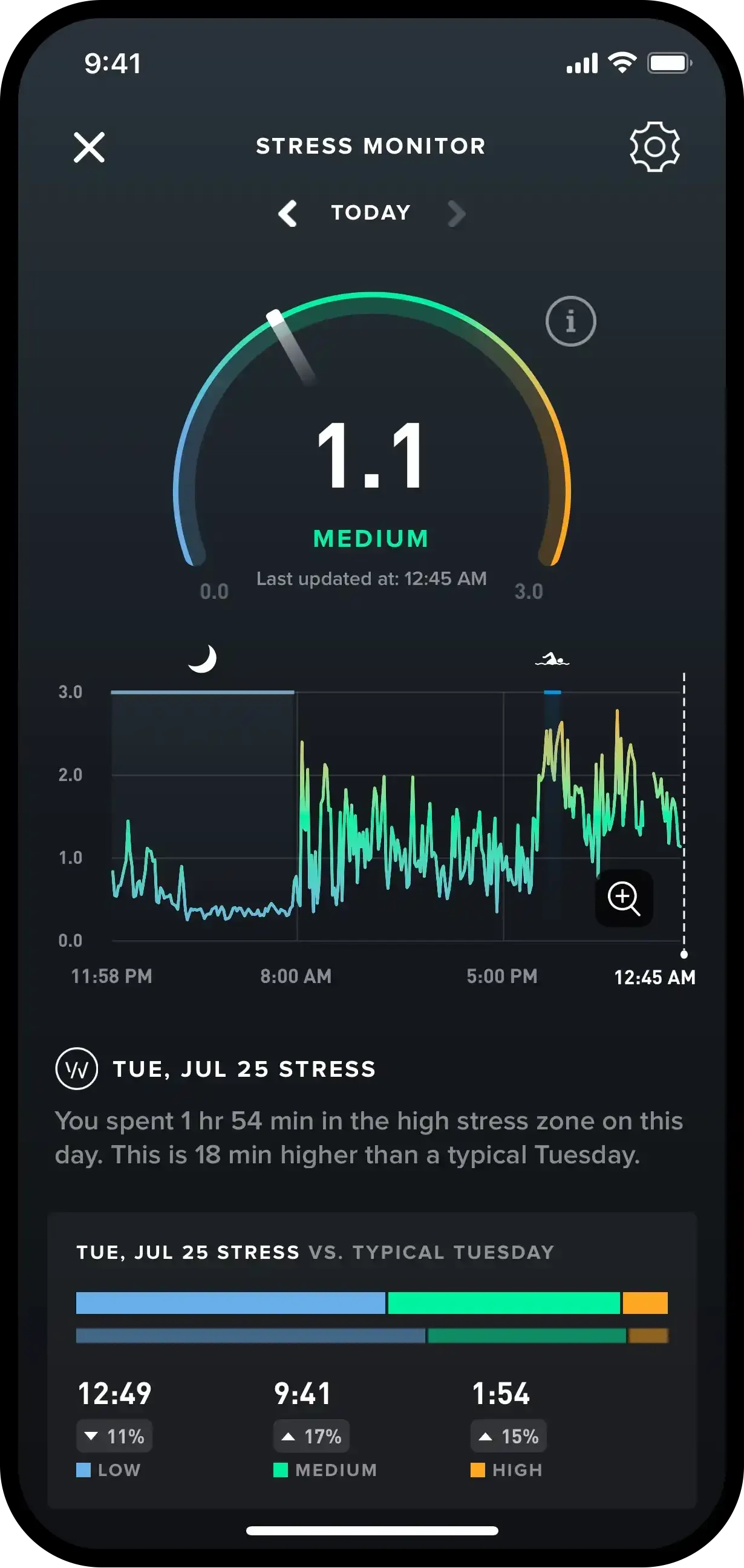
- Measures heart rate and HRV "in the moment as an indicator of your physiological response to stress".
- Recommends "science-backed" breathwork exercises to either increase relaxation or alertness.
- Trends over time, HRV levels over time? Could be interesting.
Oura Ring
Oura creates rings that measure health. They claim: "Your finger provides the most accurate reading for over 20 biometrics like heart rate, body temperature, blood oxygen, and more".

Haven't done any research to see if Oura's claim about the finger is true, if it is truly the most accurate, non-invasive way of measuring vitals, it could be worth looking into.
The oura ring calculates your nighttime HRV using rMSSD, the most commonly measured form of HRV. (so does Whoop)
It calculates the difference between successive IBIs (inter-beat-intervals) in milliseconds, squares the values, and takes the root of the mean.
Advantage: sampling interval can be as low as just 30 seconds, and still produce a meaningful measurement.
In fact, it's considered the best measure for short term HRV variations - which from what I gather is right up our street.
src: https://tryterra.co/blog/measuring-hrv-sdnn-and-rmssd-3a9b962f7314

Oura seems to be ahead of the curve with this design, but there are competitors popping up
src: https://www.circular.xyz/health
Oura API allows for querying of metrics from your ring - assume a membership is needed
src: https://medium.com/@lserafin/exploring-the-oura-cloud-api-with-postman-4d1c4abcd888
Who uses these products? Where is HRV used in the world?
Tech mag "The Verge" states: "Like the Oura Ring, (the) Whoop (band) is a buzzy fitness tracker worn by the rich and famous. LeBron James and Michael Phelps were among the first... celebrity investors like Rory McIlroy, Patrick Mahomes, and Kevin Durant."
src: https://www.theverge.com/22957195/whoop-review-fitness-tracker-wearables
Wikipedia also state that other sportspeople like Tiger Woods, Justin Thomas, Virgil van Dijk and Trent Alexander-Arnold also wear the Whoop band.
In sport:
HRV is used in the detection of non-functional overreaching (NFOR) states, which are periods when athletic performance is substantially decreased, due to prolonged, intensive training.
src: https://www.ncbi.nlm.nih.gov (difficult to read publication)
Measuring athletes fitness & fatigue to determine their readiness to train and prevent overtraining.
src: https://www.scienceforsport.com/heart-rate-variability-hrv/ (more of a layman's article, easier to read)


Comments
Post a Comment